
How do you know if an emerald is real? It’s a fair question — emeralds are one of the most imitated gemstones in the world, and the fakes fall into three camps: glass, synthetic lab-grown stones, and composites. Most of them give themselves away to a trained eye in seconds. Here are the seven tests that matter, roughly in order of how much they cost you to run (from free to a lab fee).
Quick answer: Real emeralds have visible inclusions (jardin), uneven color zoning, and stay cool in your hand. Glass fakes are flawless and perfectly even. Synthetic emeralds need a lab report to detect. When money is involved, only a report from GRS, GIA, or Gübelan settles it.
How do you know if an emerald is real? It’s a fair question — emeralds are one of the most imitated gemstones in the world, and the fakes fall into three camps: glass, synthetic lab-grown stones, and composites. Most of them give themselves away to a trained eye in seconds. Here are the seven tests that matter, roughly in order of how much they cost you to run (from free to a lab fee).
1. The eye test: perfection is the first red flag
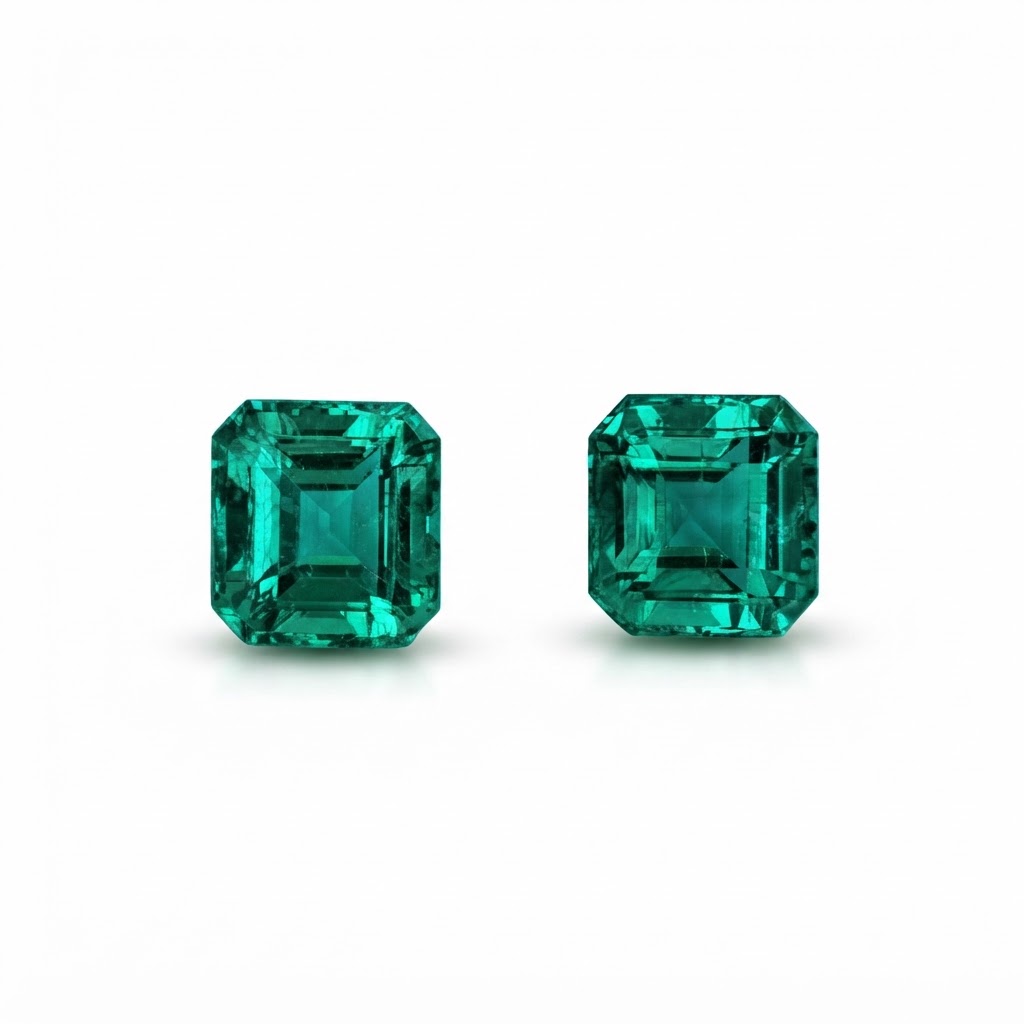
Nature does not make flawless emeralds. Nearly every real emerald carries visible inclusions — the internal garden, or “jardin,” that gives emeralds their character. If a stone looks glassy-clear and perfectly uniform, be suspicious.
**What to look for in a real stone:**
- Visible inclusions, even tiny ones, when held near the eye or under a loupe
- Slight color zoning — one area slightly deeper or bluer than another
- A garden-like interior texture rather than a watery, glassy look
**What fakes look like:** perfectly even color, zero inclusions, and often a suspiciously vivid green. Green glass is also lighter than it looks — more on that in test 3.
2. The loupe test: in with the garden
A $10 jeweler’s loupe (10x) is the best money a buyer can spend. Under magnification:
- **Natural emerald:** angular, mossy inclusions; growth lines that run in irregular directions; sometimes tiny crystals of other minerals
- **Glass:** bubbles, swirls, or nothing at all — round bubbles are the classic giveaway
- **Composite (assembled) stones:** a visible glue line where layers meet, often at the girdle
3. The weight-in-hand test
Emerald has a specific gravity around 2.7 — noticeably denser than glass, which sits near 2.4. In practice: for the same size, a real emerald feels heavier than a glass fake. This test takes experience to calibrate, but dealers use it constantly. It’s also free.
4. The heat test: real stones stay cool
Glass warms quickly in your hand. A real emerald, like most crystalline gems, dissipates heat and stays cool to the touch longer. Hold the stone in a closed palm for 30 seconds and touch it to your lip or wrist: still cool means a real gem is more likely; quickly warm means glass or plastic is likely.
5. The UV light test
Under longwave UV light, many glass fakes fluoresce an eerie, uniform green or glow chalky white — because coloring agents in the glass light up. Most natural emeralds are inert or show a dull, weak red at most. Strong, even fluorescence under UV is a red flag. (A cheap UV flashlight works fine for this.)
6. The “too cheap” test
The fastest authenticity test of all is the price tag. A vivid, clean “emerald” for $50 at a market stall is not an emerald. Fine emeralds simply do not sell at glass prices — our [emerald price guide](/education/emerald-price-guide/) shows what each quality tier actually costs per carat. If the price is wildly below market for the quality shown, the stone is either fake or heavily treated and undisclosed.
7. The lab report: the only test that settles it
Every test above can raise or lower suspicion, but none is proof. Only a report from a major lab — **GRS, GIA, or Gübelin** — confirms natural origin, treatment level, and (often) geographic origin. For any emerald over $500, insist on one. If a seller hesitates at a lab report request, walk away.
We provide verification with our stones and welcome independent testing before purchase. [See our current loose emerald inventory](/product-category/loose-stones/).
Common fakes, ranked by how often we see them
1. **Green glass (most common).** Flawless, light, warm quickly, may bubble under loupe. 2. **Synthetic/lab-grown emerald.** Real beryl chemistry, grown in a lab — chemically similar but worth a fraction of a natural stone. Only detectable with certainty by a lab. 3. **Composite/assembly stones.** Genuine emerald fragments glued onto green glass or a lower-value base. Look for the glue line at the girdle. 4. **Other green gems mislabeled.** Tsavorite, peridot, green tourmaline, and green fluorite are all sold as “emeralds” by careless or dishonest sellers. Fluorite in particular is soft and scratches easily — a scratch test with a steel needle (fluorite scratches, emerald doesn’t) exposes it.
Frequently asked questions
**Can a fake emerald pass all seven tests?** A high-quality synthetic can pass every home test — that’s why the lab report exists. Use the home tests to filter out the crude fakes and negotiate for certification on anything serious.
**Do real emeralds scratch glass?** Yes — emerald (Mohs 7.5–8) is harder than glass, so it will scratch it. But so do many other green gems, so this test rules fakes in but doesn’t confirm an emerald.
**Are flawless emeralds fake?** Almost always, yes — either glass, synthetic, or so heavily treated that clarity was manufactured, not mined. Truly flawless natural emeralds exist only in museum territory.
**How much does verification cost?** Independent verification runs roughly $50–150 for a standard report — cheap insurance on any meaningful purchase, and we encourage it.